


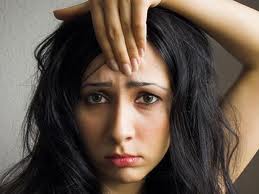
 Do you ever feel like this? What is a brow lift and when do I need one? How do you know if it's the eyelid or the brow? This week I hope to give you the information you need if you have these questions, or know someone who does.
Many people show up to the office wanting their eyelids done. The eyelids droop, look bad, and sometimes even effect their vision. The question is..this, is it the brow, the lids, or a combination of the two?
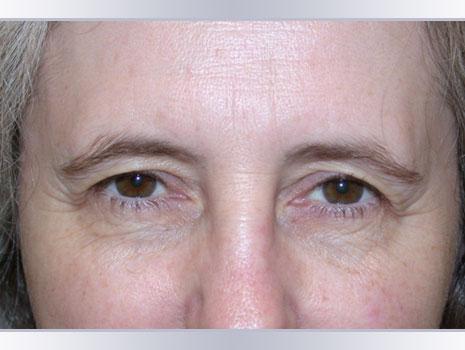 If you look closely at this picture, what do you see? First, it looks like her lids are drooping. On closer inspection, the problem is a little more subtle. If you look at the brow position, it is very low. There is a hood over the outside of the eyelid and out over the outside of the eye. This is a tell-tale sign....lateral hooding. The second thing you notice is how low the eyebrow is in relation to the eye. In females, the normal position should be above the boney rim of the upper eye and should have an arch to it that is highest at about the outer iris (colored part of the eye). Her brow is far from being in the proper position...it is very low. She may come asking to have her eyelids fixed, and without further examination, she may be right, but the primary problem is her brow.
Brow ptosis, or droop, is a problem that can be multi-factorial. It is partially hereditary and is added to, as a problem, by facial fat loss. It can cause cosmetic issues, making you look older, tired all the time, and causes wrinkles in the forehead due to over-use of the muscles in the area so you can see. Brow ptosis can also cause visual field problems. Our peripheral vision is dependant on a clear field of vision, up, down, medial and lateral. What the droop can cause is an occlusion to the vision. Once the brow falls significantly, it is like having blinders on a horse, you can only see straight ahead!

In many cases, the brow droop is accompanied by upper lid laxity (blepharachalasia) as well. When this happens, we try to address both problems at once. For older patients with visual problems, we establish the problem exists first by doing a "visual field" test. This establishes if your vision is actually effected by the extra or low tissue. Then the lid or brow is taped out of the way and the test repeated. This allows us to tell if removing eyelid tissue or elevating the brow is indicated, or if both are indicated.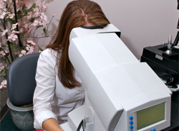 (Visual field testing.)
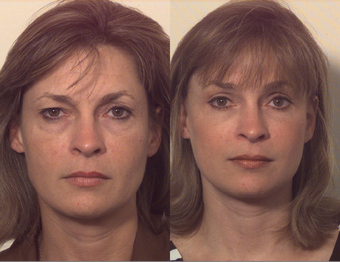 This is a great example of an eyelid problem only. If you look closely you see that the brow position is exactly as we discussed. The brow is in a good position as far as it relates to the boney part of the eye socket, and it is arched nicely. Also note that there is no lateral hooding present as we saw in the previous picture. It is the eyelids that are the problem and a simple blepharoplasty is sufficient to fix this. This is a great result by the way, off of google images.

A blepharoplasty means removing skin from the upper eyelids and often a small amount of fat. This gives you back the lid platform for eye make-up, makes you look less tired, and is very rejuvenating, knocking several years off of your appearance. I usually do these in the office, mostly under local. It takes about 45 minutes or so, you go home after, there usually is no more than minor bruising, and after healing several months, you can't even see the scar. It is a great procedure.
When a brow lift is done for cosmetic purposes. I do them using a scope and a camera. Some people still make a large incision on the scalp but I think the scope gives great results without significantly moving the hair line and without a big scar.
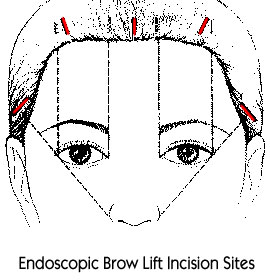 This picture depicts where the small incisions are placed for a brow lift. We shave no hair, the hair line stays the same, and the results are just as good as the old big incision.
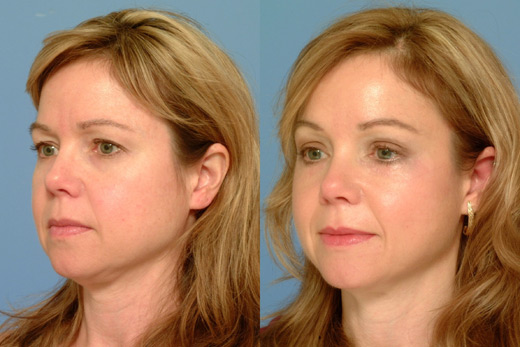
This shows a nice result from a brow lift. She looks much younger and the hoods that she had before are now gone. The brow position is arched and good...no surprised look.
If you are dealing with these problems, come see us today at Total Body Surgical. We can help...call 918-786-7780 or 1-877-weight-0.


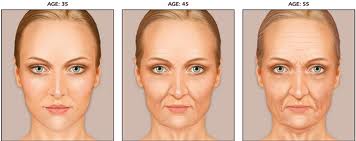 As you can see in this graffic, as volume is lost, the skin begins to respond to gravity and "folds" in typical spots start to form. Nasolabial folds are the most common, forming around the base of the nose to the corners of the mouth. Secondly, "bags" begin to form under the eyes. This is due to shrinkage of the fat pads in the cheek area that, in younger people, "windowshade" the fat pad under the eye. This creates the dark circle under the eye which is really shadowing, as light is blocked by the overhanging fat pad. The other commonly effected areas are the "marionette lines" at the lower corners of the mouth and vertical lip lines. One other common complaint is thinning of the lips and loss of the youthful shape of the lip.
 This picture depicts the "cone of youth" and how aging turns it into a box. Again, most of this is due to loss of volume and loss of skin elasticity.
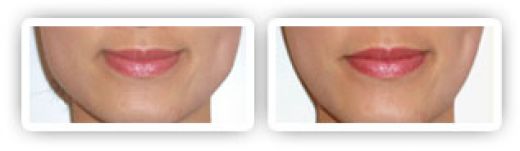
 It can be used literally anywhere in the face. We use it to fill the cheek area, the nasolabial folds, marrionette lines, and lips. It can also be used to correct nasal deformities or acne scars. Think of it as putting dirt in a hole in your yard without disturbing the grass. It is used to fill deformities or add volume to the cheek area, the nasolabial folds or marrionette lines. It can be used to make lips larger or reshape them. The second type of filler non-occuring in the body and made of a calcium compound mixed with a sugar based carrier. This filler is good for volumizing but can only be used in deeper tissues.
 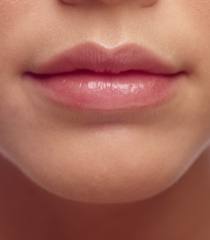 Hope this helps everyone. We love fillers and do them very well. Call today and come see me at 918-786-7780. All cosmetic consultations are complimentary.

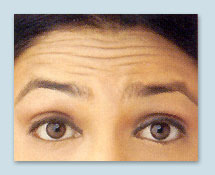
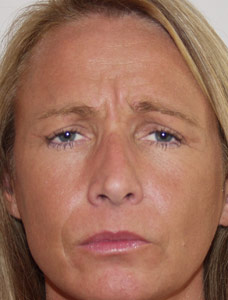
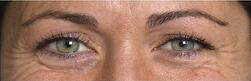 Notice the "crows feet" around the outer aspect of the eye and the hypertrophy or enlargement of the muscle below the eye. Botox works extremely well to smooth these areas creating a more youthful look.

 Last week on the Total Body Surgical Cosmetic Surgery blog we talked about wrinkles and how good skin care and Botox can make a big difference. This week we will take a look at the common fillers that can be used.