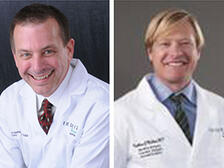

 As surgeons that wear many different hats during the week (Cosmetic Surgery, Reconstructive Surgery, Bariatric Surgery, and General Surgery), Dr. Swetnam and I are faced with constant challenges; and it is a significant challenge to keep everyone satisfied. As one of my favorite subjects, today I'll discuss post weight loss cosmetic surgery.
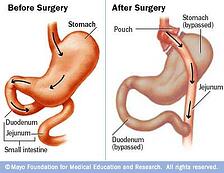
Typically, bariatric surgery patients first and foremost have decided to take the plunge in changing their lives. I heard it best this week from a patient who told me, "Dr. Miller, I am sick and tired of being sick and tired." It's a lifetime of habits that they must break: the way they eat, the way they exercise, even just the way they think. The positive repercussions of weight loss are legion. It truly is an entire lifestyle change. It is amazing for me to see how one positive change by a bariatric patient effects those around them. I recently saw a patient that was 12 weeks out from a sleeve gastrectomy.
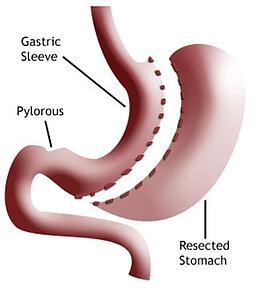
To both of our satisfaction, he had already lost 70 pounds. On top of that, his wife had also lost 30 pounds just by following the same diet that I'd ask him to impart postoperatively. The little cherry on top of all this icing post surgery was that their daughter had also decided to begin to make healthy food choices, resulting in weight loss as well. It's amazing how one positive decision begets another positive decision. Unfortunately, one of the few anticipated post weight loss "problems" (besides having to purchase a new "skinny" wardrobe), is what to do with all the extra skin that sometimes results from losing excess weight...? The thing is, not everyone ends up with excess skin. Really, it depends on multiple factors: the patient's age (no, I didn't just call you old); how many children a patient may have had; excess roller coaster weight loss and gain over the year; and the personal skin elasticity of a patient. The latter really making the majority of the difference. Quite honestly, it really comes down to how you picked your parents when it comes to skin elasticity. Genetics is key to just about everything under the sun, and skin elasticity certainly falls into that category. So why does this matter? Think of it this way: if you have a 10 pound sack of potatoes and take out 9 pounds of those potatoes, you've got a lot of sack left over, right? Sometimes this sack shrinks down, and other times it does not. Again, all as a result (or lack thereof) of the degree of skin elasticity someone may or may not have. I am often asked if exercise will help to tighten up the skin. Unfortunately, I can assure you that all the situps and jogging in the world will not help that excess skin to shrink. So, what is the answer then? What do I do now that I've lost this weight and my skin gets rashes between the folds? And sure, I've lost a significant amount of weight, but my clothes still don't fit right lugging this extra skin around! This is where the post weight loss recontouring comes into play.
Though not every post weight loss patient needs them, there are multiple body contouring options for those that do post weight loss: tummy tucks, liposuction, arm lifts, breast lifts, thigh lifts, and body lifts. Typically, one or a combination of these procedures have been successfully used after weight loss surgery to refine patients’ bodies, and help them enjoy everyday activities as they envisioned at the beginning of their journey. The most common procedure that Dr. swetnam and I do is the tummy tuck. Essentially, that entails not just removing the excess skin present, but also tightening up the actual abdominal muscles. We basically create an internal corset that results in a waist that many people had not seen for many, many years. Following the tummy tuck, I would say that breast lifts are our next most common procedure post weight loss. It's amazing to see how people's attitudes change as they continue along their weight loss journey. Specifically, people who had become shy wall flowers virtually become alive again. Their inner personality that had been stifled for so long is reawakened. No longer just satisfied to wear bulky sweaters and oversized tshirts to hide their insecurities, they sometimes pursue breast lifts. Breasts that were once being tucked into their front pockets are now perky and full on the top of their chest- right where they should be. Following breast lifts, arm lifts (sometimes termed brachioplasty in doctor-ese) would be the next most common procedure that Dr. swetnam and I perform. It is essentially just removing extra skin and remaining fat to create a nicely contoured arm again. Thigh lifts are much like arm lifts, except just a bit further south. I would say that thighs are the most challenging to operate on, as God didn't create us in anticipation of having incisions in our groins (location required to lift up those thighs again). I should mention here that the great thing about having two fellowship trained cosmetic surgeons together in a group means that more procedures can be done at the same time. Why does that make any difference? First and foremeost, the operative time is more than halved. This is not just better for the patient's health, but also is more cost friendly for the patient in the long run.

So when should a post weight loss patient consider having body contouring procedures done? Typically, I suggest that a patient be within 80% of their weight loss goal. Typically, this is at sometime between 12 and 18 months. As I said, body contouring is not something that is essential from a health perspective, but rather as the end result of a long journey. It's basically seeing the final end point result come to fruition. It has been said more than once that we are flattered to be a part of this whole process, both as the wearing the weight loss surgeon's hat, as well as that of the body recontouring surgeon's. We literally know our patients inside and out!
Come see us today for your complimentary Cosmetic consultation!! 918-786-7780 or 1-877-weight-0.

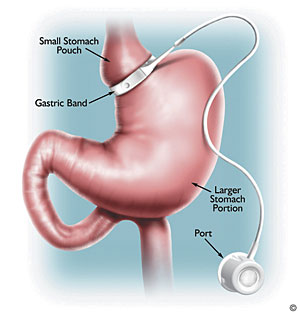 The Gastric Band on the stomach.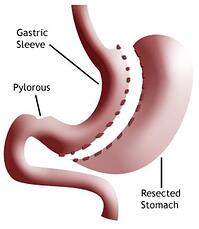




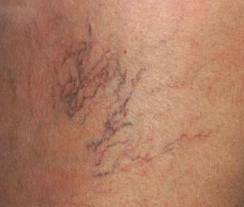 The best way to handle them is with sclerotherapy. Now that may sound scary but really it is pretty simple. We inject the veins with a chemical that causes them to stop working. Sometimes a small clot forms in them and over time, your body resorbs the clot and vein eliminating the problem. The process is fairly easy, quick, and causes minimal pain. We have you wear a tight (compression) stocking for about two weeks after the injections and after that....nothing. You may have some areas of pigmentation in the area for a few months and this usually resolves without further treatment. Because this problem is superficial, most insurances consider this treatment Cosmetic and will not cover it under the usual policy. We charge $350 per treatment and a treatment consists of two vials of the solution we use which is the safe amount at one sitting. If more treatments are required, we usually wait about 6 weeks before re-treating. Small areas usually require only one session. Big, or multiple areas may require several sessions.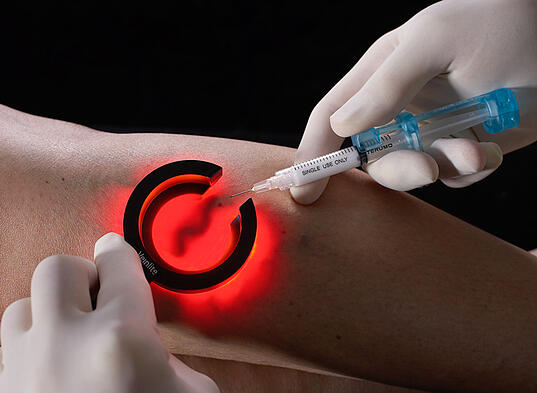
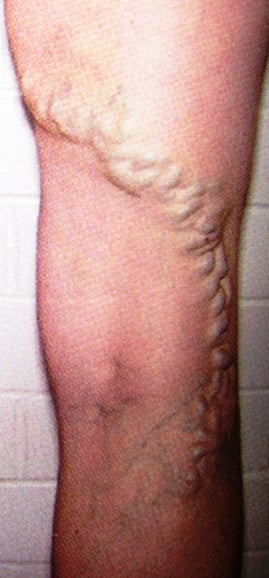 varicose veins.

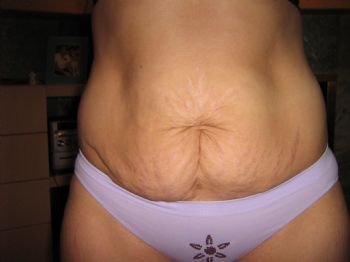 This picture demonstrates stretch marks and a lower abdominal scar in the mid line from a c. section or hysterectomy...definitely from pregnancy. Liposuction alone will not correct this problem, only a tummy tuck will do. You can also see the fatty tissue in the "love handle" area creating the dreaded muffin top in pants. This can be corrected by liposuction.
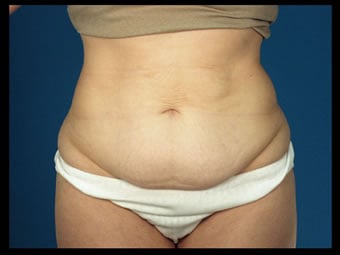 In this photo you see the lower abdominal apron that can form with weight gain and loss along with pregnancy. No matter how much you exercise, it is darn near impossible to get rid of this. Both of these pictures also show the "pooching" of the lower abdomen as the connective tissue stretches with pregnancy.
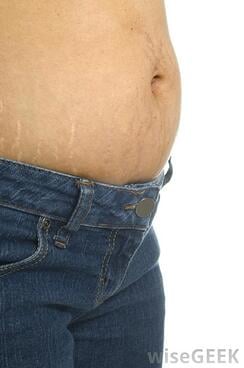 An Men....just when you thought it was safe....it can happen to us too ya know. With large weight gains and losses they can develope. Some supplements can also cause the problem. And men have a tendency to form love handles as a matter of genetics.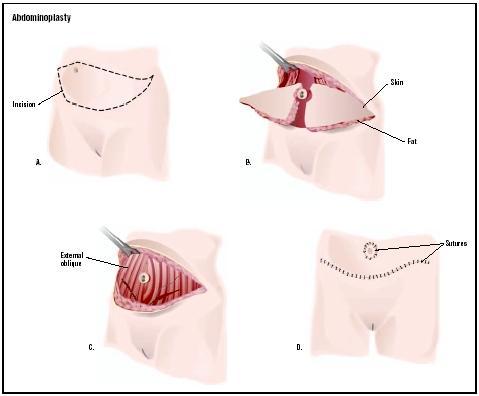

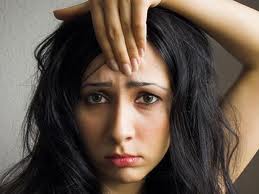 Do you ever feel like this? What is a brow lift and when do I need one? How do you know if it's the eyelid or the brow? This week I hope to give you the information you need if you have these questions, or know someone who does.
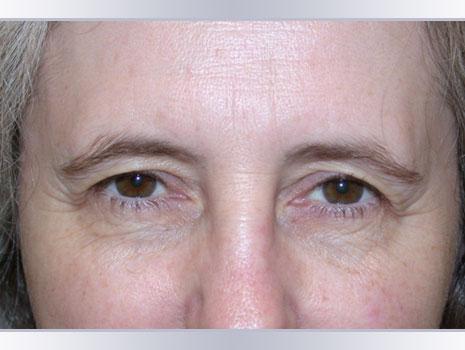 If you look closely at this picture, what do you see? First, it looks like her lids are drooping. On closer inspection, the problem is a little more subtle. If you look at the brow position, it is very low. There is a hood over the outside of the eyelid and out over the outside of the eye. This is a tell-tale sign....lateral hooding. The second thing you notice is how low the eyebrow is in relation to the eye. In females, the normal position should be above the boney rim of the upper eye and should have an arch to it that is highest at about the outer iris (colored part of the eye). Her brow is far from being in the proper position...it is very low. She may come asking to have her eyelids fixed, and without further examination, she may be right, but the primary problem is her brow.
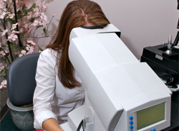 (Visual field testing.)
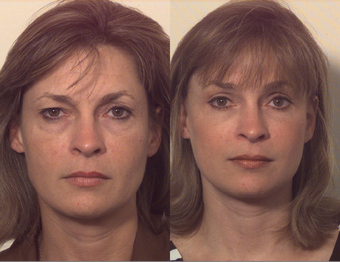 This is a great example of an eyelid problem only. If you look closely you see that the brow position is exactly as we discussed. The brow is in a good position as far as it relates to the boney part of the eye socket, and it is arched nicely. Also note that there is no lateral hooding present as we saw in the previous picture. It is the eyelids that are the problem and a simple blepharoplasty is sufficient to fix this. This is a great result by the way, off of google images.
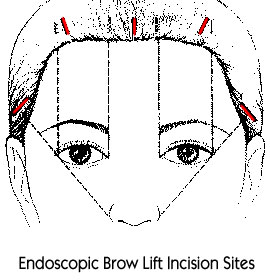 This picture depicts where the small incisions are placed for a brow lift. We shave no hair, the hair line stays the same, and the results are just as good as the old big incision.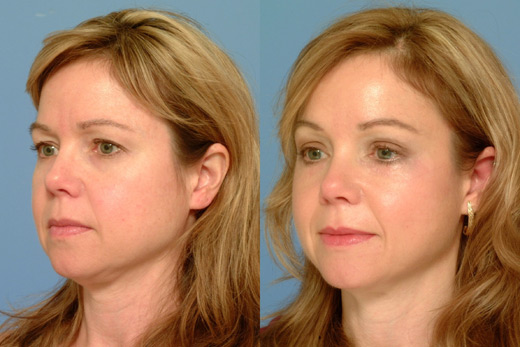



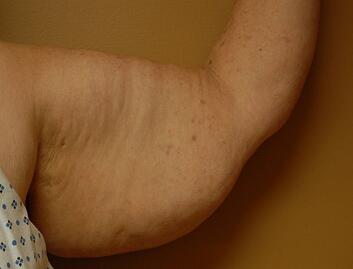 As you can see from the picture, the upper arm has very loose skin with a little excess fatty tissue. Compared to the lower arm, it looks "odd" and makes some people very self conscious. Also, when trying to buy clothes, people will avoid sleeveless attire and buying sleeved clothes is hard due to the large diameter of the upper arm.
.jpg)
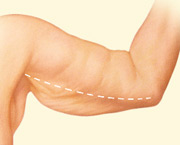
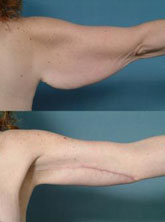 This photo shows a good before and after. The results are pretty striking. The down side in Cosmetic surgery, and the trade off, is always the scar, but these tend to lighten up with time and for most, it is worth it. Some make the incision along the lower part of the upper arm but I personally think the least visible area is as shown.

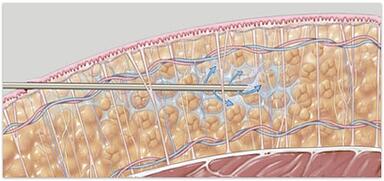 Here you can see the tumescent fluid (numbing medicine, saline or salt water, and a vasoconstrictor) being injected into the fat layer. This provides anesthesia for the area and helps to minimize bleeding. Of course, there is a limit to how much lidocaine we can use based on the patients weight and this limits the number of areas we can do at any given time. Even though larger areas can be done, we do them all the time, smaller areas are perfect for this technique.
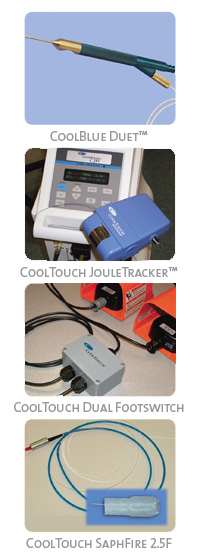 Warming the skin promotes new collagen formation, causing the skin to contract to its new position and tightening it.
 This is a picture of a selection of cannulas in different sizes or diameters. The fat is suctioned out of the body, into a cannister, and discarded.