Total Body Surgical Blog

You're NOT putting that in me! Total Body Cosmetic Surgery

Posted by Jeff Swetnam, MD on Wed, Feb 08, 2012 @ 01:34 PM

TBS logoDr Swetnam


Colonoscopy....ugggg!  Why do we need one?  Well, it is fairly simple.  First of all, what is a colonoscopy?  It is the examination of the inside of the colon with a flexible scope.  What is it for?  It is to discover any abnormalities in the mucosa or lining of the colon that may be harmful, the biggest being colon cancers.  According to the National Cancer Institute....

Definition of colon cancer: Cancer that forms in the tissues of the colon (the longest part of the large intestine). Most colon cancers are adenocarcinomas (cancers that begin in cells that make and release mucus and other fluids).  Estimated new cases and deaths from colon and rectal cancer in the United States in 2012:

New cases: 103,170 (colon); 40,290 (rectal)
Deaths: 51,690 (colon and rectal combined)

These are pretty big numbers.  Kind of scary!  What can we do about it?  Well, lets talk about colon cancer a bit.  It develops from the lining of the colon.  It can have genetic causes but also most frequently occurs without aa direct genetic component.  It is usually from the glandular structures in the colon, thus called an adenocarcinoma.  The most common age of occurrence is in the mid sixties.  It develops from polyps in the colon, if left unchecked grow and can become malignant.

snaring a colon polyp This picture represents a small polyp that is non malignant.colon cancer  If left unchecked the small polyp above can become the large cancer that you see here.

colon polyp progression  This picture illustrates the presumed progression of polyps from a small benign problem to a cancer.  Of course polyps are not the only thing we look for.  Inflammatory bowel disease and other problems are also detected with this test.

Now that you are hopefully convinced that colon cancer can be prevented by screening and therapeutic colonoscopy..why doesn't everyone have it done?  Mostly fear is my perception.

This is not a part of our bodies that we like to show people for one thing and most people think it will be a painful affair.  Let me tell you, it is not.  The worst part of the whole ordeal is getting ready for it and the prep regimens we use today are good and getting better all of the time.  Most people use sedation during the test so you basically feel nothing.

So if you are having colon symptoms of any type or are 50 or older, go get your scope done.  It is not that big a deal and it will give you peace of mind. 

Check out this link....TV news spot from Fayetteville, Arkansas about our liposuction procedures... http://www.4029tv.com/news/30406524/detail.html

Remember our specials too!!

Topics: lap band at Total Body Surgical, varicose veins, Total Body surgical cosmetic surgery, Fayetteville, general surgery, laser liposuction

Merry Chrismas Happy New Year..Total Body Surgical Cosmetic Surgery

Posted by Jeff Swetnam, MD on Tue, Dec 27, 2011 @ 03:13 PM

Click meNew blogs starting after the new year.

Let's hope 2012 will be a great one and that things actually do "change".

Look for some of the same offers this year AND some new ones.

Thank you all for making our year a very good start here in Grove.

Topics: breast implants, tummy tuck., laser treatment, obagi, brow lift, Breast Augmentation, augmentation, arm reduction, laser liposuction, breast lift, lap bands, Face lift

Lasers and veins: Total Body Surgical Cosmetic and Vein

Posted by Jeff Swetnam, MD on Sun, Dec 18, 2011 @ 09:36 AM

logoDr Swetnam


Today, for the final installment on lasers, we are going to discuss the use of lasers to treat veins on the face, legs and elsewhere. 

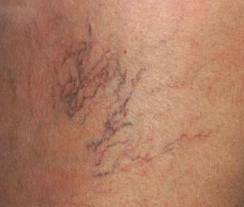
First, leg veins.  Superficial or spider veins occur very frequently on the legs.  As I have discussed before, when the areas are large, I prefer injections to the laser because I can cover much more ground and cause less dicomfort.  For small areas, however, the laser is very convenient and in most cases works very well.spider veins  The veins in this picture are perfect....why??  Remember that laser light is attracted to pigment.  The darker the pigment, when the laser light hits it, heat is generated, the small vein is injured, the flow stops and the vein is gone.  After lasering the vein it turns red and forms a clot that slowly dissolves.  I use the Cutera 1064 laser for the darker veins.  For veins that have a lighter and more red pigment we use the KTP or 536 wavelength laser.
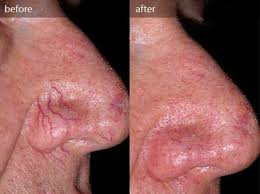
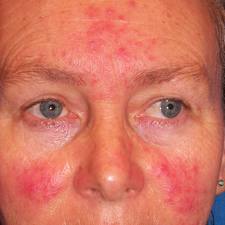
The second area that is most commonly complained about is the face.  Adults of European descent commonly develope visible veins around the base of the nose that are unsightly.  Those with Rosacea get veins that are visible on nose, at the base of the nose, and nearly anywhere else on the face.nose veinsrosacea

The nasal areas we treat with the laser to close the veins.  For Rosacea, it may require several different methods, even systemic medications on some cases. 

The results we get are very good.  In most cases, new areas will arise and will require repeat treatments from time to time we call maintenance.

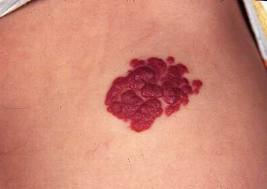
A third condition that is vascular and can be treated with laser are hemangiomas.hemangioma  These areas occur in the young and old and anywhere on the body.  They can be very small.  They can also be very large.  Most of these can be closed with the laser.  Larger ones may require several treatments.  They turn dark, dry up, and are usually gone.
There are other uses for lasers but that about covers the more common things and I'm worn out with it.  We have covered how lasers work, hair removal, skin rejeuvenation, abnormal coloration, and vascular lesions....we treat them all.  Something new next week.

Don't forget our specials at Total Body Surgical.  We have a few surgical spots left before the first of the year then the summer countdown begins....believe it or not.Click me

Topics: laser hair removal, Laser treatments with fractional lasers and pearl, l, Skin care, laser treatment, Total Body surgical cosmetic surgery, laser liposuction, laser tattoo removal, Laser vein therapy, laser

Lasers and facial discoloration, Total Body Surgical Cosmetic Surgery

Posted by Jeff Swetnam, MD on Sun, Dec 11, 2011 @ 09:47 AM

Click me logodr swetnam

In the past few weeks we have discussed how lasers work, removing tattoos, removing unwanted hair, and renewing the skin.  These are important uses for laser technology and as it gets better, we will see more uses pop up.  Today I want to discuss pigment issues on the face, arms, and chest. 

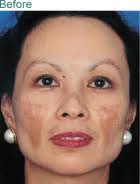
Why do we get them and what are they??melasma  is picture shows melasma, aka "pregnancy mask".  It is caused by sun in combination with hormonal changes.  It is quite common and cases can vary a great deal in severity.  These changes can occur on anyone but seem to be worse in ethnic skin.  It can occur over the entire face but is the most common on the cheek area.
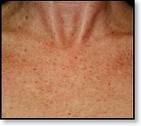
chest pigmentationThe second area is on the chest.  Brown spots and red spots occur with age and again.....the sun.  Sun worshipers get this and the more you worship the worse it gets.
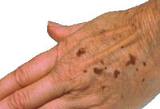
age spotsThe third area is on the hands.  Age spots, liver spots, whatever you want to call them are caused by sun damage and can be present over the entire arm.
Even if you don't worship the sun, we all get exposure during normal daily activites of walking out doors, driving, etc.  So they can occur on any of us.

How do we treat them??  First, I suggest a good skin care regimen.  This is key to getting the skin to heal and to slow down the pigmentation process.  It also prepares the skin for more aggressive treatments.  At Total Body Surgical we like to use the Obagi system for treating damaged skin.  Obagi contains tretinoin and hydroquinone.  These stimulate the skin to grow faster and shed the dead portion of the skin.  It also turns off the melanocyte or pigment cell.  Lastly, it contains a good sun screen to prevent further damage.  Once used for a short period of time, we treat these areas in a couple of ways.  First is the IPL (flashlamp or Intense Pulsed Light).  This is a machine that shoots short bursts of intense light.  The wavelength is set to target the darker colors in the skin and some red pigments.  These areas then peel off and since the pigment cells are turned off, their recurrence is much less severe.  Continued protection from the sun makes them "stay away".  Treatments are usually done in a series of 3-5 treatments and the areas gradually disappear.  We can also use laser to resurface the skin and remove pigment.  The Pearl laser is perfect for this killing "two birds with one stone".  This gives you rejuvenated skin texture, helps with fine lines and wrinkles, and rids the pigment too.  Recovery time for this treatment is only about 4-5 days.  The IPL recovery time is minor redness for about 24 hours then crusting of dark areas that will peel off.  The Obagi system causes the sensation of dryness and may cause some minor shedding of dead skin for a few weeks.

Come see us at Total Body Surgical where our staff is trained and experienced with Obagi and Skinceutical products.  We also have a full product line in the office and can get you started.

Remember our specials that are still going on too!!

Call 918-786-7780 for a complimentary cosmetic consult or fill out a contact form and we will contact you!!

More laser stuff next week!

We also have special Christmas pricing on products and gift certificates available for all laser services and skin care, Latisse and more!!

Topics: laser hair removal, Laser treatments with fractional lasers and pearl, hair removal, laser treatment, IPL, cosmetic surgery, Lap band, pigment problems, laser liposuction, skinceuticals, laser tattoo removal, Obagi skin care line, latisse

What are Lasers all about? Total Body Surgical Cosmetic Surgery

Posted by Jeff Swetnam, MD on Sun, Nov 13, 2011 @ 02:48 PM

logoDr Swetnam

I want to spend some time discussing lasers and how we use them today.  Lasers have been around for some time.  In the past, at least as far as medicine is concerned, they have been a technology looking for an application.  In the past several years, improvements in technology have made them much safer and applications have greatly increased.

laser  Austin Powers....demonstrated his ignorance of laser technology.  Lasers have been a mystery to most!! 
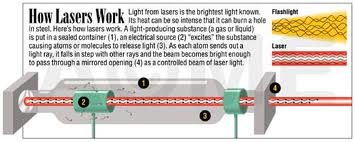
Laser and intense light or flash lamp therapy are both based on concentrated light.  Let's talk about lasers first.

laser technology

Lasers are concentrated light that can be used for multiple applications.  They have been used in industrial applications for years. Medical lasers have numerous applications as well.  We use them to to clear up and make skin look prettier.  We use them to remove tattoo's.  They are used to treat veins and vascular problems on the body and face, even varicose veins.  We can remove unwanted hair, laser fat cells, make skin contract, use them to cut skin, and now we can treat toenail fungus which has been a nagging problem.

Pulsed light therapy is based on a bright flash of light shot onto the skin.  Also called a flash lamp, this technology has been used for other applications, photography, etc.  In cosmetic surgery we use it to treat spots and different pigments on the skin of the face or body.

Unfortunately, there is no single laser that can be used for all applications.  Not to get too complicated (because it is complicated) the way we choose what laser or lamp to used is based on the chromophore we are trying to treat.  A chromophore is the part of a molecule or cell that produces its color.  Each laser or flash lamp has a wave length that attacks that color.  This is why one laser or lamp will not work on all colors.  We know what colors we are trying to treat and select the laser or lamp that will work on that specific color.  This is where the art meets the science.  With some applications, we are aiming at water in the skin as the chromophore, especially when resurfacing the skin. 

The most common laser currently used in Cosmetic Surgery are the nd-YAG, the KTP, the CO2, and the pulsed dye lasers.  Each of these target a different chromophore or color.  The newest developments in the technology is the fractional and q-switched technologies.  We used to resurface skin by ablating or lasering the entire skin surface.  Since the skin recovers by healing from the hair follicle, recovery was slower than desired and this scared people.  Fractional lasers give us the ability to divide or fractionate the pulse of light from the laser.  This leaves islands of undamaged skin between the areas treated.  There are more and larger areas for the skin to heal.  The advantages are that healing is much faster and complication rates are less.  The disadvantages are that the treatment is not quite as good and may require more than a single session.  Q switching is a way to modulate the laser output to get a better "quality" of light energy, more intense output per pulse.  I will talk more about Q-switching when I discuss tattoo removal.

Flash lamps also treat specific colors in the skin.  They are used for treatment of brown pigment, red pigment, and hair in the treatment areas.  With flash lamps, we must change the wavelength of the light to treat each problem.

Now that the boring part is over, next week we will begin to explore the problems we treat and what we use to treat them.

Click meDon't forget our nail fungus, lap band, and liposuction deals that are currently running.  We also are having multiple Botox events in Tulsa and Grove to get everyone ready for the holidays!!  Send me a message, fill out a contact form, or call 918-786-7780 to find out when and where.

Topics: laser hair removal, Laser treatments with fractional lasers and pearl, lap band at Total Body Surgical, varicose veins, laser treatment, cosmetic surgery, Botox, laser liposuction, lap bands, Laser vein therapy, laser, chronic venous insufficiency

The In and Out of Liposuction (no pun intended!)

Posted by Jeff Swetnam, MD on Sun, Sep 25, 2011 @ 10:34 AM

dr swetnamlogo

I am writing on liposuction today to introduce a fall pricing reduction at Total Body Surgical!  We are pros at this procedure and NOW is the best time to do it.  Why??? Well, liposuction does take some time to completely heal and "stabilize".  Getting ready for next summer starts today!  I have extensive training and experience with all types of liposuction and not to toot my own horn....am pretty good at it!

Liposuction has been around for a long time.  The first procedures were deadly in fact.  It was rediscovered and refined later but still often required blood transfusion and hospitalization.  Due to the work of Dr. Klein (a dermatologist), new and better transformations in the procedure now make it safe and more effective for the right people. 

Who are the right people you might ask.  Liposuction works best for those who are "in shape" but have problem areas.  A chubby tummy, hips or love handles, saddle bags or outer thighs, inner thighs, chest, arms, or neck.  Liposuction IS NOT a weight loss procedure.  For those with smaller areas that they just cannot get rid of, liposuction is a procedure you should consider.

Modern liposuction can usually be done in an office procedure room.  We use sedation and tumescent fluid so that you can come and go the same day.  Tumescent fluid is the key to limiting pain and blood loss.   The technique, developed by Dr. Klein, is based on good science and is very safe when done properly.  The fluid is made using lidocaine (a local anesthetic), epinephrine (a normal chemical in the body that causes blood vessels to constrict or get smaller), and saline (salt water in concentrations that occur in the blood).  After marking the areas to be treated and sedation, the areas are injected with this fluid.  This causes the blood vessels in the area to constrict and numbs the area thus markedly limiting blood loss.  The areas fat is then removed with a small hollow tube.  This is done very carefully to not leave any defects or dents.liposuctionThe channels of fat removed shrink with time and the area smooths and recontours.  Without the fat!  Vaser and Laser liposuction are technologies that are used to heat the skin so that it shrinks to fit the smaller size of the underlying fat pad.  In my experience, using these technologies alone, without revoming the fat, does not give satisfying results and recovery times are about the same....a few days, then soreness for a couple of weeks.  The fat that is injured during the procedure and not removed is absorbed by the body.

The complications that can occur are:

-lumpiness (usually occurs if weight is gained after liposuction)

-bruising (resolves with time)

-sagging skin (the one variable that cannot be controlled.  Usually not a problem if the areas are selected appropriately)

-hyperpigmentation (especially in ethnic skin)

-dents (occur by removing too much fat in an area and can usually be repaired with revision)

Deaths can occur and are discussed by the media at length.  These usually occur when inexperienced physicians give too much lidocaine.  We are very meticulous about the dosing and when done properly, lidocaine toxicity is very rare.  However, any cosmetic procedure can have REAL complications and should not be taken lightly!  That's why I only do liposuction in the office on healthy individuals. I see patients personally, evaluate them, discuss the procedure's risks and benefits, and if I feel it is not the procedure to give you the results YOU desire, I will tell you.

Please go to my portfolio page to see some of my results and click on the picture or button to see our exclusive pricing on liposuction.  ACT NOW as this is a limited offer!!  Call 918-786-7780 for a complimentary consultation or fill out the contact form and we will call you....I look forward to meeting you!!

Click me

Topics: Liposuction, tumescent liposuction, cosmetic surgery, laser liposuction, total body surgical, vaser, smart lipo