


A good friend asked me to talk about fillers this week and I promised I would, so here goes.
First of all, what is a filler and why would someone want to use one?? Fillers are just what the name sounds like. As we age, we lose volume in our face. We lose it around the eyes, in the cheek area, and in the folds around the mouth and lips. This is caused by hormonal changes and in many cases, genetics plays a significant role.
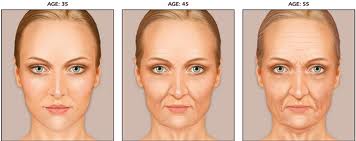 As you can see in this graffic, as volume is lost, the skin begins to respond to gravity and "folds" in typical spots start to form. Nasolabial folds are the most common, forming around the base of the nose to the corners of the mouth. Secondly, "bags" begin to form under the eyes. This is due to shrinkage of the fat pads in the cheek area that, in younger people, "windowshade" the fat pad under the eye. This creates the dark circle under the eye which is really shadowing, as light is blocked by the overhanging fat pad. The other commonly effected areas are the "marionette lines" at the lower corners of the mouth and vertical lip lines. One other common complaint is thinning of the lips and loss of the youthful shape of the lip.
 This picture depicts the "cone of youth" and how aging turns it into a box. Again, most of this is due to loss of volume and loss of skin elasticity.

Now that we have covered what happens, what can be done about it? There are a few ways we can correct or reverse the aging process. The first thing I recommend is good skin care. It wouldn't be right to fix up a vintage car and not re-paint the thing would it? You want your skin to look as youthful as possible and I think Obagi is as good as it gets for that.
Second, we have to increase volume. Even when we do face lifts to remove excess skin, most of us will add volume to fill up the upper part of the face...this is youthful.
The first and best way to increase volume is with facial implants. They are solid silicone and never go away....one time and that's it. The second best way is with fat grafting. We use your fat, process it, and place it back in the face. This is good because it can last a pretty long time...5-7 years. The third way is with fillers.
Fillers have been around quite a long time. First came collagen fillers that only lasted about 3-4 months and required skin testing. We now have them that last a year or more and can be used in anyone. The most commonly recognized one is Juvederm. It is made of cross-linked Hyaluronic acid (HA). HA is a substance that is present between our cells naturally. Juvederm is clear and almost jelly like.
 It can be used literally anywhere in the face. We use it to fill the cheek area, the nasolabial folds, marrionette lines, and lips. It can also be used to correct nasal deformities or acne scars. Think of it as putting dirt in a hole in your yard without disturbing the grass. It is used to fill deformities or add volume to the cheek area, the nasolabial folds or marrionette lines. It can be used to make lips larger or reshape them. The second type of filler non-occuring in the body and made of a calcium compound mixed with a sugar based carrier. This filler is good for volumizing but can only be used in deeper tissues.
Radiesse is great for liquid face lifts where we place volume into the cheek area, lifting the face and restoring volume. It can be used in nasolabial folds and carefully in marrionette lines. It cannot be used in lips or in the dermis (skin). Most other fillers on the market are made of HA, regardless of the name, except Artefill (made of collagen and spheres of solid material) and Sculptra (made of a powder material that causes collagen to form). These two materials are made to inject deeply and last 5+ years. All fillers have advantages and disadvantages. You must consult with your injector to know which one is best to get the result you want.
My preferences are for Juvederm and Radiesse, for shorter term fillers. I use silikon 1000 for my long term filler as it never goes away. I use it to make great looking lips that stay. I do small injections a month or so apart to get the right amount of correction.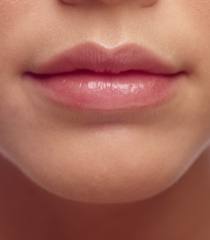 Hope this helps everyone. We love fillers and do them very well. Call today and come see me at 918-786-7780. All cosmetic consultations are complimentary.


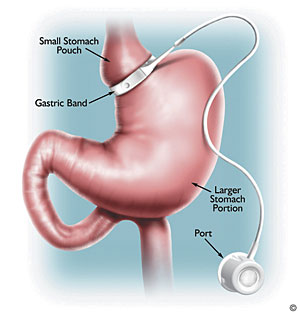 The Gastric Band on the stomach.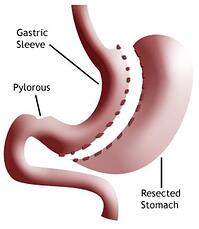
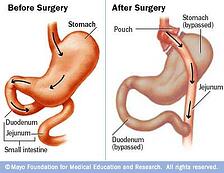


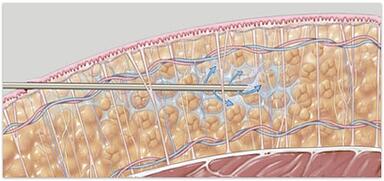 Here you can see the tumescent fluid (numbing medicine, saline or salt water, and a vasoconstrictor) being injected into the fat layer. This provides anesthesia for the area and helps to minimize bleeding. Of course, there is a limit to how much lidocaine we can use based on the patients weight and this limits the number of areas we can do at any given time. Even though larger areas can be done, we do them all the time, smaller areas are perfect for this technique.
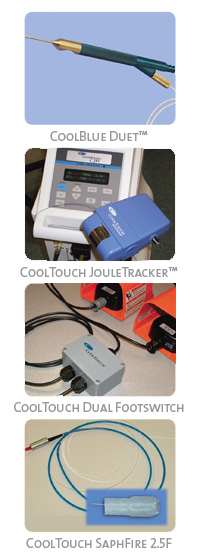 Warming the skin promotes new collagen formation, causing the skin to contract to its new position and tightening it.
 This is a picture of a selection of cannulas in different sizes or diameters. The fat is suctioned out of the body, into a cannister, and discarded.





 In this picture, the nipple position is great, the skin is tight, and only an implant is necessary. After implant placement, the skin will stretch to accomidate the implant and the breast will take on a nice and natural shape. This is the perfect patient for implants alone. As discussed in earlier blogs, the incision placement options, size, and type of implants are variable according to taste. At your consult, all of this will be discussed and you can decide.
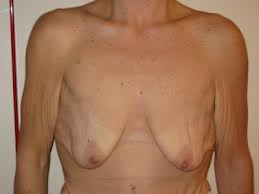 This picture depicts one of the "easy" decisions. Obvious drooping of the breast and nipple complex below the lower fold of the breast where it attaches to the chest. If we were to just place an implant in this situation, there would be a nice implant present with a sagging breast hanging off with the nipple still pointing at the floor. Several procedures are used to lift the breast. We usually use the Weiss pattern lift (anchor incision) for larger lifts and the vertical (lolly pop) lift. Both types of lift raise the nipple into a more normal position, remove excess skin below the breast and move remaining breast tissue into a higher position. In the picture above, we call this the "rocks in socks" breast. There is some breast tissue hanging around the nipple (rocks), and skin (socks). If lifted only, this will be a very small and flat breast. This is when an implant can really be beneficial to give the breast some volume. Others have a sagging nipple and breast but still have a good amount of volume. A lift alone, or with implants are both choices.
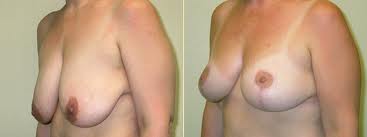 This is a photo of a breast lift alone. The shape is nice and nipple position is good, however, the upper pole remains flat. This can only be fixed, long term, with an implant. Implants, however, can be placed after a lift so you can decide later if you want them or not.
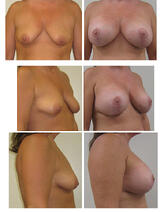 As you can see, a lift with an augmentation can be done simultaneously with good results. This gives good fullness to the upper pole of the breast with the added benefit of only one procedure.
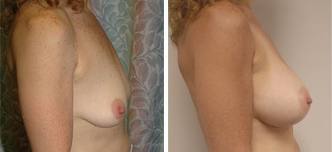 Breast pseudoptosis with implants. Looks pretty good, but upper pole is somewhat flat. If this is acceptable, it is a great choice.

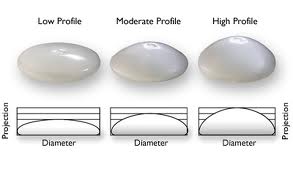 There is a new higher profile not pictured here.
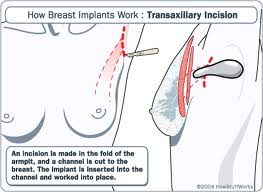 Arm pit incision-saline or silicone.
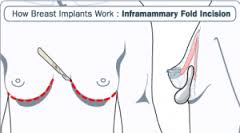 The incision is only 2-4cm, not this big!! Saline or silicone.
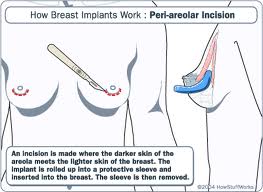 incision around the nipple. Saline or silicone.
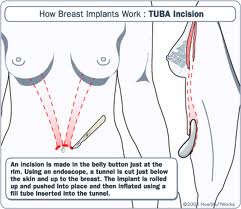 Silicone cannot be placed through the belly button.

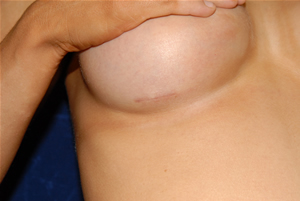

 Capsular contracture on right with implant thightening and displacement. It would feel very hard if you could feel it.
 implant "rippling"

.jpg)


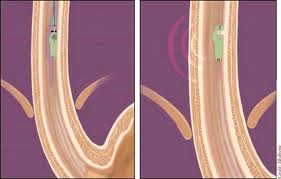
 This is a good depiction of how reflux occurs. The esophagus is not prepared to handle the exposure to acid that the stomach is. The "heartburn" that can occur is normal on occasion, but if it occurs frequently, it can cause changes in the lining of the esophagus... esophagitis. Besides the symptoms this can cause, I.E. heartburn, chest pain, hoarseness, coughing, bad breath, inability to sleep, it can cause strictures in the esophagus, difficulty swallowing, and changes in the cellular lining that can be dangerous.