

 Let's talk about eyelids for a bit. As the old Yiddish proberb says, "the eyes are the mirror of the soul"....eyes are very important. When we meet someone, where is the first place most people look??? the eyes. Therefore, if we have prematurely aging eyes, they can make us look older, more tired, and cover one of the most beautiful attributes we all have. Eyelids, though small, can change even the way we think about ourselves. We look in the mirror and even though we don't feel tired because of the "tiredness" we see in our eyes we begin to reflect it in our actions.
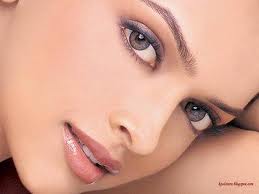 Youthful eyes are wide and inviting. The upper lid is full with few wrinkles and no excess skin present. The lower lids are smooth with skin color that is pink. There are no bulges, folds, or "bags" to draw our attention from the color of the iris or the pupil. We see well as there is no abstructing skin in the way. We look and feel great.
As the instoppable aging proces happens, eyes, are at times, the first thing to reflect it.
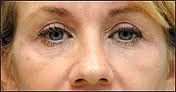 Why is this? When did it happen? How did the first picture become the second?? Well, let's get some answers. The eyelid skin is some of the thinnest skin on the body. It also moves more than the other skin and it is constantly exposed to the damaging UV rays of the sun. The other thing that happens is a loss of fatty tissue in the face. This exposes underlying connective tissue where it is tethered to bone. Lines and bulges that are normally window shaded by ample fat pads begin showing up when those fat pads diminish. Fine lines and wrinkles develope from sun damaged skin, motion, and sagging of the muscle around the eye. The process is unrelenting and over time, the sagging skin can even decrease vision.
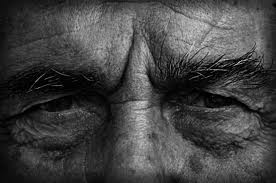 What we see here is a large amount of extra skin on the upper lid obstructing vision and the fat pad below the eye is protruding with severe skin changes. Regardless of actual age, these changes can create the image of a very old person and the view of the eye is just a slit...not a very good view of the soul.
At Total body surgical we do a lot of eye rejuvenation. It is one of the more rejuvenating procedures we do. It is fairly simple and can take years off. Upper lids are done with some light sedation and local anesthesia. Lower lids can also be done with light sedation sculpturing the fat pad and either removing the loose skin or lasering it to tighten it up. We often graft fat into the cheek to restore a more youthful look. Recovery time for upper lids alone is quick, usually about a week and for lower lids a week or two depending on laser use. We have great pricing on lids so be sure to check us out! Cosmetic consultations are complimentary so call 918-786-7780 for a visit. Also remember our other offers on the lap band, breast augmentation, hair removal, and liposuction. Summer is right around the corner, so get ready now!!!

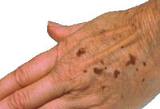 AGE SPOTS (liver spots)
.jpg) ACNE DYSCHROMIAS
ACNE DYSCHROMIAS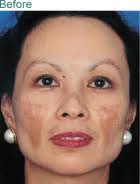 MELASMA

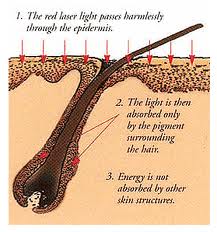.jpg) This image shows how the dark hair absorbs the laser energy and carries it to the hair creating cells in the follicle and eliminates them. Through this process, the hair becomes thinner, lighter, and in most cases, is eliminated all together. We can treat hair anywhere on the body with excellent success. In most cases it requires an average of 6 treatments for body hair and 9 treatments for facial hair. The treatments are usually spaced about 4-6 weeks apart to allow the hair to be treated in its different stages of growth. Due to new hair follicle development during life, some people may require "touch up" treatments in the future, maybe a couple of times every few years. Laser technologies do not work well on blond, white, or gray hair.
This image shows how the dark hair absorbs the laser energy and carries it to the hair creating cells in the follicle and eliminates them. Through this process, the hair becomes thinner, lighter, and in most cases, is eliminated all together. We can treat hair anywhere on the body with excellent success. In most cases it requires an average of 6 treatments for body hair and 9 treatments for facial hair. The treatments are usually spaced about 4-6 weeks apart to allow the hair to be treated in its different stages of growth. Due to new hair follicle development during life, some people may require "touch up" treatments in the future, maybe a couple of times every few years. Laser technologies do not work well on blond, white, or gray hair.



 This picture represents a small polyp that is non malignant.
 If left unchecked the small polyp above can become the large cancer that you see here.
 This picture illustrates the presumed progression of polyps from a small benign problem to a cancer. Of course polyps are not the only thing we look for. Inflammatory bowel disease and other problems are also detected with this test.
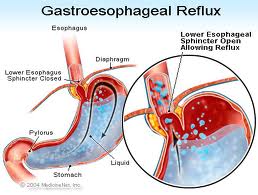 Reflux can happen to all of us. The symptom of the problem is "heart burn". Belching stomach contents into the esophagus exposes the lining of the esophagus to acid causing discomfort and at times, severe pain that can be severe enough to be mistaken for a heart attack.
 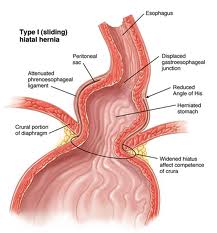 To treat this problem, in most cases, there are medications that can control it. Many times, medication can eliminate the symptoms and make the problem manageable. If not controlled, some may develope scar tissue that can lead to stricture. Others can have cellular changes that can increase cancer risk...it is a problem that should not be ignored.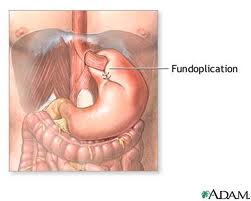
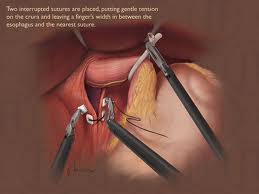
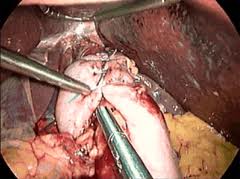 Hospital stay for this procedure is a couple of days and recovery time is fairly short.
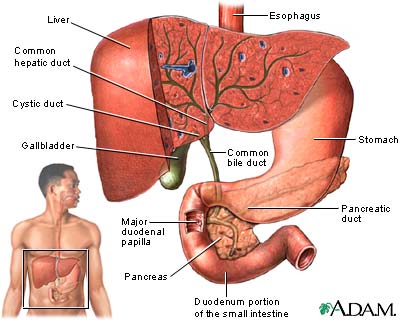
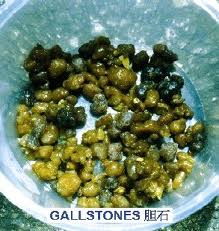
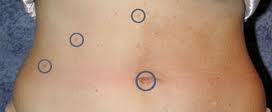 Here is a picture of gallstones....not too pretty.
 We can live normally without a gallbladder in most cases, especially a sick one. Some people may experience a little diarrhea that usually resolves but most importantly, the pain is gone. If the disease is not treated, the stones can escape the gallbladder and get into the duct causing bigger problems that we won't discuss here. The gallbladder can also become infected which can be an emergency.
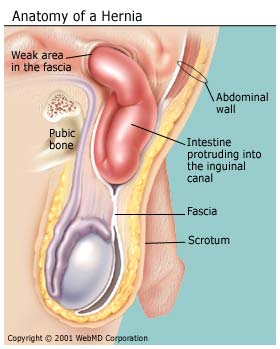
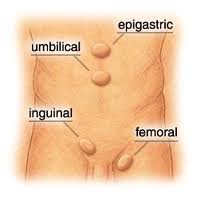 What exactly is a hernia?? Our abdominal wall is composed of layers of muscle and connective tissue. The connective tissue looks like a thin tendon. All of us who have cut up meat or a chicken have noticed the shiney layer of whitish, tough tissue that surrounds the muscles....this is connective tissue or fascia. Pound for pound it is very tough and it is responsible for holding in the contents of the abdomen and gives the muscles something to pull on when they contract. A hernia occurs when there is a hole created in this layer and contents of the abdomen poke through that hole. The mid line of the abdomen (especially the belly button) and the groins are the weakest areas and therefore are the most common sites for naturally occuring hernias. Here is a picture of an inguinal hernia...
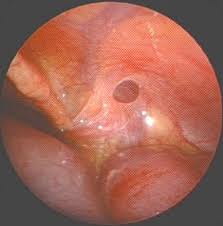
 Here is a photo of what the hole looks like from the inside using a laparoscope and as you can see, with the contents removed, there is an actual hole.
 Hernias become a problem when things get stuck in them...things like intestines, fatty tissue, and other contents of the abdomen. They can also cause discomfort due to stretching of the wall of the abdomen with straining to lift, urinate, or have a bowel movement. Things can also become stuck, lose blood supply and die within the hernia. Small hernias may never cause a problem. These are the common hernias of the abdominal wall. I won't cover the more obscure ones due to time and the others are fairly uncommon.