


I have seen many discussions on message boards about how to manage hyperpigmentation. Some of the advice is good and some not so good. First of all, what is hyperpigmentation and why do we get it?? Pigment issues are very common. The causes are numerous but the primary cause is the sun. When we are young and invincible we worship the sun throwing care to the wind. This is especially true for my generation. Oils and iodine were the staples of sun worshippers. Nobody had heard of sun screens and everyone burned. Now we deal with those transgressions fighting skin damage and discolorations (dyschromias).
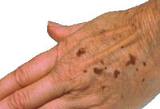 AGE SPOTS (liver spots)
How does the sun cause pigment issues? UV light from the sun causes the skin to protect itself by producing brown pigment or melanin. Melanin comes from melanocytes. People of color who originate from sunnier areas of the world produce this naturally and have darker skin. Caucasians have to rev up the melanocyte with UV exposure. UV light used to be from the sun but now the sun is rivaled by tanning beds and tanning goes on even in winter. What happens is the melanocyte is started up and over numerous exposures, it doesn't stop. This creates areas of hyper(too much)pigmentation. Other causes are pregnancy (hormones) that lead to the "mask of pregnancy" otherwise known as melasma. Trauma (acne scarring) especially in ethnic skin can cause dark areas. There are also many other metabolic diseases that can lead to the problem. .jpg) ACNE DYSCHROMIAS
ACNE DYSCHROMIAS
So what do you do about these areas. On the sites I have been reading there are many suggestions from herbs to topical creams. Let me tell you how I deal with dyschromias. Since these areas are significant and are due to long term damage, they need significant therapy to heal the skin. That means OBAGI. The Obagi skin care system is a medical grade collection of products that heal the skin and correct the underlying damage. 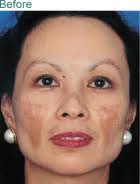 MELASMA
Obagi products were developed by a dermatologist Dr. Obagi. They are based on Tretinoin which is a cousin of Retinol and causes the skin to turn over faster making it look healthier. The other compound is hydroquinone. This is a compound that turns the melanocyte off decreasing the amount of pigment produced. Also there is sunscreen to prevent future damage. After starting the treatment with Obagi we recommend IPL treatments with the Cutera Limelight to remove the pigment that is present now. IPL treatments target the color present in the skin and using a flash lamp the pigment is shot with bright light to break it up. The body then absorbs it and with the hydroquinone and Tretinoin stopping the production of more pigment, it can be controlled from now on. Protecting the skin from further UV exposure with sunscreen and maintenance Obagi keeps it away.
Come by or call 918-786-7780 for Obagi or Skinceutical products. We can ship from our office.



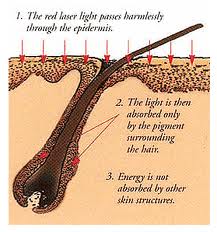.jpg) This image shows how the dark hair absorbs the laser energy and carries it to the hair creating cells in the follicle and eliminates them. Through this process, the hair becomes thinner, lighter, and in most cases, is eliminated all together. We can treat hair anywhere on the body with excellent success. In most cases it requires an average of 6 treatments for body hair and 9 treatments for facial hair. The treatments are usually spaced about 4-6 weeks apart to allow the hair to be treated in its different stages of growth. Due to new hair follicle development during life, some people may require "touch up" treatments in the future, maybe a couple of times every few years. Laser technologies do not work well on blond, white, or gray hair.
This image shows how the dark hair absorbs the laser energy and carries it to the hair creating cells in the follicle and eliminates them. Through this process, the hair becomes thinner, lighter, and in most cases, is eliminated all together. We can treat hair anywhere on the body with excellent success. In most cases it requires an average of 6 treatments for body hair and 9 treatments for facial hair. The treatments are usually spaced about 4-6 weeks apart to allow the hair to be treated in its different stages of growth. Due to new hair follicle development during life, some people may require "touch up" treatments in the future, maybe a couple of times every few years. Laser technologies do not work well on blond, white, or gray hair.




 This picture represents a small polyp that is non malignant.
 If left unchecked the small polyp above can become the large cancer that you see here.
 This picture illustrates the presumed progression of polyps from a small benign problem to a cancer. Of course polyps are not the only thing we look for. Inflammatory bowel disease and other problems are also detected with this test.
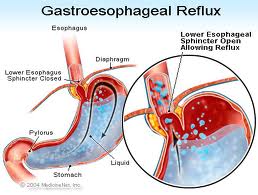 Reflux can happen to all of us. The symptom of the problem is "heart burn". Belching stomach contents into the esophagus exposes the lining of the esophagus to acid causing discomfort and at times, severe pain that can be severe enough to be mistaken for a heart attack.
 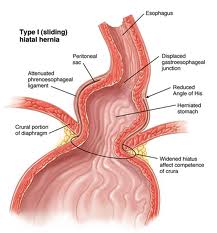 To treat this problem, in most cases, there are medications that can control it. Many times, medication can eliminate the symptoms and make the problem manageable. If not controlled, some may develope scar tissue that can lead to stricture. Others can have cellular changes that can increase cancer risk...it is a problem that should not be ignored.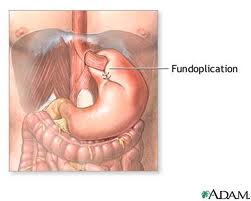
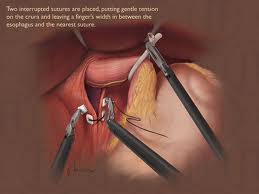
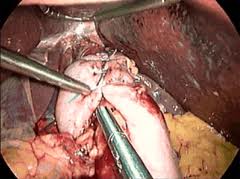 Hospital stay for this procedure is a couple of days and recovery time is fairly short.
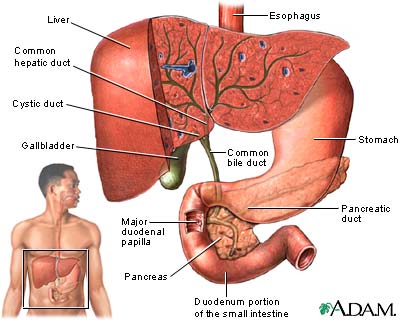
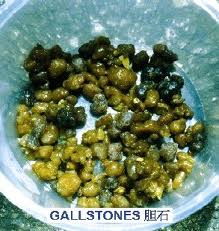
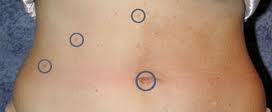 Here is a picture of gallstones....not too pretty.
 We can live normally without a gallbladder in most cases, especially a sick one. Some people may experience a little diarrhea that usually resolves but most importantly, the pain is gone. If the disease is not treated, the stones can escape the gallbladder and get into the duct causing bigger problems that we won't discuss here. The gallbladder can also become infected which can be an emergency.
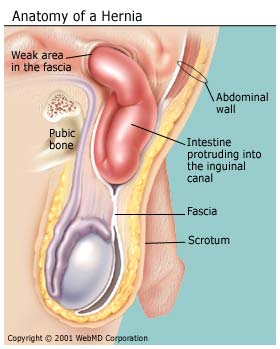
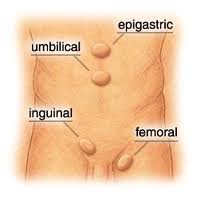 What exactly is a hernia?? Our abdominal wall is composed of layers of muscle and connective tissue. The connective tissue looks like a thin tendon. All of us who have cut up meat or a chicken have noticed the shiney layer of whitish, tough tissue that surrounds the muscles....this is connective tissue or fascia. Pound for pound it is very tough and it is responsible for holding in the contents of the abdomen and gives the muscles something to pull on when they contract. A hernia occurs when there is a hole created in this layer and contents of the abdomen poke through that hole. The mid line of the abdomen (especially the belly button) and the groins are the weakest areas and therefore are the most common sites for naturally occuring hernias. Here is a picture of an inguinal hernia...
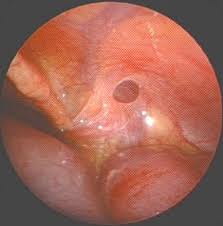
 Here is a photo of what the hole looks like from the inside using a laparoscope and as you can see, with the contents removed, there is an actual hole.
 Hernias become a problem when things get stuck in them...things like intestines, fatty tissue, and other contents of the abdomen. They can also cause discomfort due to stretching of the wall of the abdomen with straining to lift, urinate, or have a bowel movement. Things can also become stuck, lose blood supply and die within the hernia. Small hernias may never cause a problem. These are the common hernias of the abdominal wall. I won't cover the more obscure ones due to time and the others are fairly uncommon.